Wednesday, April 29, 2026, 12.30pm to 1.30pm BST
How do we deliver a low-carbon future while meeting the world’s growing energy demands? This webinar brings together leading Cambridge researchers from the Institute for Energy & Environmental Flows to explore practical, scalable solutions for the energy transition.
Chaired by Professor Stuart Clarke, Yusuf Hamied Department of Chemistry, the session will highlight how fundamental research is enabling cleaner fuels, more efficient machines, and smarter use of waste heat, turning scientific insight into real-world impact.
Dr Rafia Nimal, Yusuf Hamied Department of Chemistry, will discuss the role of hydrogen as a clean energy carrier, focusing on her innovative work in electrolysis to improve the efficiency and scalability of hydrogen production. Her research tackles one of the key challenges in making green hydrogen a viable component of future energy systems.
Professor Alex Routh, Department of Chemical Engineering and Biotechnology, will explore how improving efficiency can deliver immediate energy savings, drawing on research into drag reduction, fluid flow, and machine performance. By reducing energy losses in transport and industrial systems, these advances offer powerful - and often overlooked - routes to decarbonisation.
Professor Andy Woods, Department of Earth Sciences and Head of IEEF, will examine how heat storage and re-use can transform energy systems, from storing heat in underground aquifers to capturing waste heat from data centres and using it to warm homes. His work shows how smarter thermal management can cut emissions while making better use of energy we already generate.
Together, these talks will paint a compelling picture of how research in Cambridge is helping to power the energy transition - through smarter fuels, better materials, and more efficient use of resources.
Part of The Future of Physical Sciences webinar series, this session will include short talks and a live Q&A with the speakers, featuring questions from the audience.
Questions to consider..
-
What research should Universities be doing to tackle global warming?
-
Why is easy to get money for commericallisation but hard to money for the fundamental work required to get the best materials?
-
How do we keep important research going with changing policy?
Reading Material
In advance of the webinar, we invite you to explore a selection of papers provided by our speakers, offering insights into their research:
- Development of Electrolyzer Using NiCo(OH)2 Layered Double Hydroxide Catalyst for Efficient Water Oxidation Reaction
- Development of a Binder-Free Tetra-Metallic Oxide Electrocatalyst for Efficient Oxygen Evolution Reaction
- Experimental and simulation study of self assembly and adsorption of glycerol monooleate in n-dodecane with varying water content onto iron oxide
- Towards a neutron and X‑ray refectometry environment for the study of solid–liquid interfaces under shear
- Unlocking thermal energy: capture, storage and re-use of industrial waste heat (technical report)
- Fluid Mechanics for Green Buildings
Speakers
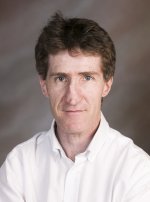
Professor Stuart Clarke is Professor of Surface Science in the Department of Chemistry, here in Cambridge, although he did his first three degrees in Oxford. Originally joining the Cavendish Laboratory (Physics) in 1993, he moved to the Department of Chemistry in 2000. His work exploits a range of international facilities, such as synchrotron and neutron scattering centres at the worlds leading institutes providing novel experimental methods to investigate interfacial behaviour. Recent interests include interfacial aspects of batteries, supercapacitors, light harvesting molecules, lubrication and corrosion. He is presently a member of the Royal Society of Chemistry Surface Coatings Group aiming to highlight the challenges and benefits of these interesting materials/coverings.

Rafia is Research Associate working in area of heterogenous catalysis, coordination chemistry and surface sciences. Her research interests focus on designing innovative catalysts for oxygen evolution reactions and other related reactions to address the global energy crisis. She aims to develop efficient and sustainable solutions for clean energy production through advanced catalyst design.
Previously Rafia worked as a PhD researcher at Yusuf Hamied department of Chemistry, Cambridge UK and Quaid I Azam university Pakistan as a commonwealth fellow for development of novel catalysts for oxygen evolution reactions. This project crafted a new and unique class of catalysts that demonstrated globally competitive performance by combining non-precious metals with novel organic ligands via a low-temperature route. Furthermore, insights into molecular phenomena at the surface of these catalysts were gained by employing advanced techniques such as SEM/TEM EDS, XPS, among others. This work has recently be patented with Cambridge Enterprise with Rafia been named sole inventor.

Professor Alex Routh received his PhD from Princeton University in the United States in 2000. He has been lecturing in Chemical Engineering at the University of Cambridge since 2006 and was promoted to full professor in 2017. His position is a joint appointment with the Institute for Energy and Environmental Flows; a multi-disciplinary research institute, within the University, spanning the physical sciences. His research is in the field of colloid science and Prof Routh has worked in the areas of encapsulation, dispersion stability, formulation and drying.
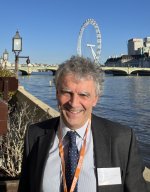
Andy Woods’ research involves developing quantitative models and analogue laboratory experiments to explore some of the challenges associated with fluid mechanics in a range of environmental and energy processes. This includes research on the long-term storage of energy in the geosphere through storage of heat or hydrogen; long-term removal of carbon dioxide from man’s environment through geological storage of carbon in deep saline aquifers; and the development of models to identify novel approaches to reduce energy consumption in buildings through more efficient supply of heat, coupled with the use of thermal batteries for interseasonal heat storage. He also has ongoing research projects exploring the dynamics of volcanic systems and the dynamics of turbulent plumes in both the atmosphere and ocean, with important implications to ocean plastics and deep-sea mining.
Much of the research that Andy leads is closely coupled with direct applications in industry or environmental engineering, where idealised models of complex multiphase processes provide a powerful complement to detailed engineering simulations.
Booking information
Booking for this event is now closed.
Contact
Are you receiving the latest news from your department?
Update your contact details to ensure you receive the latest news, events, and updates from your department.